

GLP-1 and Muscle Loss: The 2026 Evidence
Weight loss can include lean tissue as well as fat. Support muscle health with adequate nutrition, strength exercise and attention to daily function; no plan guarantees complete muscle preservation.
Explore the guideLosing weight and staying strong are related goals, but they are not the same measurement. A lower number on the scale cannot tell you how much fat you lost, whether you are eating enough, or whether getting up from a chair has become harder.
The useful response to concerns about GLP-1 muscle loss is a plan for nutrition, resistance exercise and follow-up. It starts with understanding what the research actually measured.
Lean mass is not the same as skeletal muscle
Lean mass includes muscle and other nonfat soft tissue, including body water and organs. A DXA scan estimates body composition; a decrease in its lean-mass reading is not a direct measurement of lost skeletal muscle or reduced strength. The joint professional nutrition advisory recommends considering strength and function alongside body composition.
This distinction matters when a headline says that a percentage of weight loss was “muscle.” It also matters at home: a body-composition estimate is one piece of information, not a verdict on whether treatment is helping you.
What STEP 1 and SURMOUNT-1 found
These studies involved specific trial medicines and populations. Their findings do not establish the effects of compounded preparations.
| Study | What was measured | Main finding | Important limit |
|---|---|---|---|
| STEP 1 exploratory DXA analysis | Body composition in 140 adults over 68 weeks, with semaglutide 2.4 mg weekly or placebo | Both fat and lean mass decreased; lean mass became a larger share of total body mass | A higher lean-mass percentage does not mean no lean tissue was lost |
| SURMOUNT-1 DXA substudy | Body composition in 160 adults over 72 weeks, with pooled tirzepatide doses or placebo | About 75% of weight lost was fat and 25% lean mass in both groups | Small substudy; an average ratio cannot predict an individual’s muscle strength or risk |
Sources: STEP 1 body-composition analysis and SURMOUNT-1 body-composition study.
The SURMOUNT-1 substudy reported average reductions of 33.9% in fat mass and 10.9% in lean mass with tirzepatide. These are changes relative to each tissue’s starting amount, not percentages of the total weight lost. They should not be added together. The study helps describe body-composition changes; it does not prove that clinically important muscle loss is impossible or settle whether every patient has the same risk.
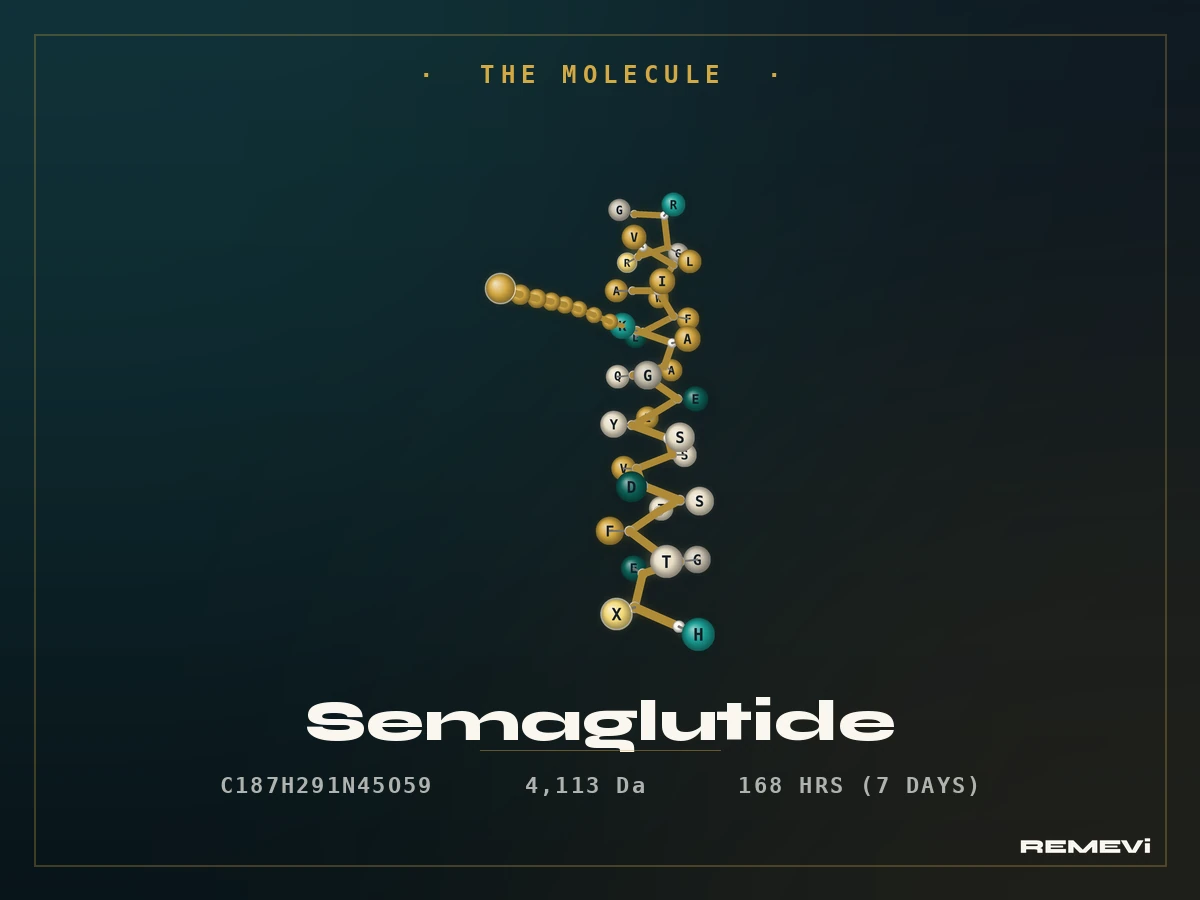 Semaglutide is a GLP-1 receptor agonist. This illustration explains the medicine’s identity; it does not depict muscle loss or predict a treatment result.
Build a food plan you can manage with less appetite
Adequate protein is part of muscle care, but it does not instruct the body to lose only fat. Total nutrition matters, and protein alone does not replace resistance training. The joint advisory emphasizes both.
Bring an ordinary day’s meals to your visit. Ask whether your plan supplies enough overall food and how to fit protein into portions you tolerate. Your target should account for medical history, including kidney disease, rather than come from a generic online calculator.
Practical ways to make that discussion concrete:
- Identify protein foods you already enjoy: eggs, fish, yogurt, tofu, beans or lentils.
- Keep an easy option available for busy days, such as yogurt or a bean soup.
- Note meals you repeatedly skip and symptoms that stop you eating.
- Ask whether a supplement would fill a specific gap before buying one.
Our semaglutide food guide includes meal examples and ways to discuss poor intake. If nausea is limiting food, use that as a reason to contact your clinician, not to push harder for faster weight loss.
Add strength work that fits your starting point
The U.S. physical activity guidelines recommend muscle-strengthening activity on at least two days each week for adults. That is general guidance, not a GLP-1-specific guarantee.
Resistance can come from bands, weights, machines or body-weight movements. A beginner might ask a professional to demonstrate a chair-based movement and a band exercise, then agree on a manageable starting routine. Someone already training can discuss how to adjust sessions when appetite or energy changes. Pain, balance problems and recent injuries deserve adaptations.
Walking is useful activity, but it should not be assumed to cover every strength goal. See semaglutide and exercise for questions to bring to a visit.
Monitor what you can do, as well as what you weigh
Choose a few everyday tasks to discuss at follow-up: climbing your usual stairs, carrying groceries, or getting out of a chair. Record whether they feel easier, unchanged or harder; these observations are not a diagnostic test.
| Observation | What to bring to the care team |
|---|---|
| You are regularly too full to finish meals | A short food and symptom log, including missed meals |
| Strength or stamina seems to be declining | When it began, recent illness or inactivity, and what tasks changed |
| Exercise feels limited by pain or balance | Which movements cause problems and whether you need physical therapy |
| Weight is falling but daily life feels harder | The weight trend plus food intake, symptoms and functional changes |
Older adults and people who begin treatment with low strength, frailty or limited intake merit particular attention. Ask whether baseline strength or body-composition assessment would help; there is no requirement that every person buy a scan. Joint advisory on assessment and muscle preservation.
Questions for your next appointment
- What nutrition target fits my health and how will we check that I can meet it?
- What strength activities are appropriate for me now?
- Which changes in daily function should prompt an earlier check-in?
- If eating becomes difficult, who should I contact before the next dose decision?
- How will we balance weight change with strength and quality of life?
Review REMEVi’s GLP-1 care information and medical team to prepare for that conversation. No program or supplement can promise complete muscle preservation.
This guide is educational and does not replace individual medical advice. FDA-approved products and compounded preparations are distinct: compounded drugs are not FDA-approved or reviewed for safety, effectiveness and quality before marketing. FDA information on unapproved GLP-1 drugs.
Common questions
Do GLP-1 medications cause muscle loss?
Studies of semaglutide and tirzepatide found reductions in lean mass along with fat loss. Lean mass includes more than skeletal muscle, and DXA measurements alone do not establish how much strength or muscle function changed. Individual risk needs assessment.
Does the 75% fat and 25% lean figure predict my results?
No. It describes average body-composition changes in a small SURMOUNT-1 substudy. It is not a personal target or proof that muscle loss cannot be a problem.
How much protein should I eat?
Ask for an individual target that accounts for your age, body size, kidney health, activity and overall intake. More protein alone does not replace resistance exercise or adequate nutrition.
Is walking enough to protect muscle?
Walking supports activity and health, but a muscle-preservation plan should also consider resistance exercise adapted to your ability. A clinician or physical therapist can help if pain, frailty or balance problems limit exercise.
Should I get a body-composition scan?
Not everyone needs a scan. Discuss whether measuring strength, function or body composition would change your care. Home scale estimates should not be treated as a diagnosis.
A clearer next step.
Bring your questions, health history and treatment goals. A licensed clinician can help assess what fits your needs.
See if you qualify →