
What to Eat While Taking Semaglutide: A Practical Diet Guide
Build meals around enough protein, a variety of foods and fluids you can tolerate. Smaller meals may help when appetite is low, but persistent difficulty eating needs clinical review—not more restriction.
Explore the guideA smaller appetite can change the practical work of feeding yourself. A meal that used to be easy to finish may now feel too large, or a familiar food may seem unappealing. The goal is a pattern you can tolerate and sustain while still meeting your nutritional needs.
The joint nutrition advisory from four professional societies recommends individual nutrition support during GLP-1 treatment, including attention to digestive symptoms, nutrient intake and muscle health. The examples below are starting points for that conversation, not a prescribed calorie plan.
Build a flexible meal around familiar foods
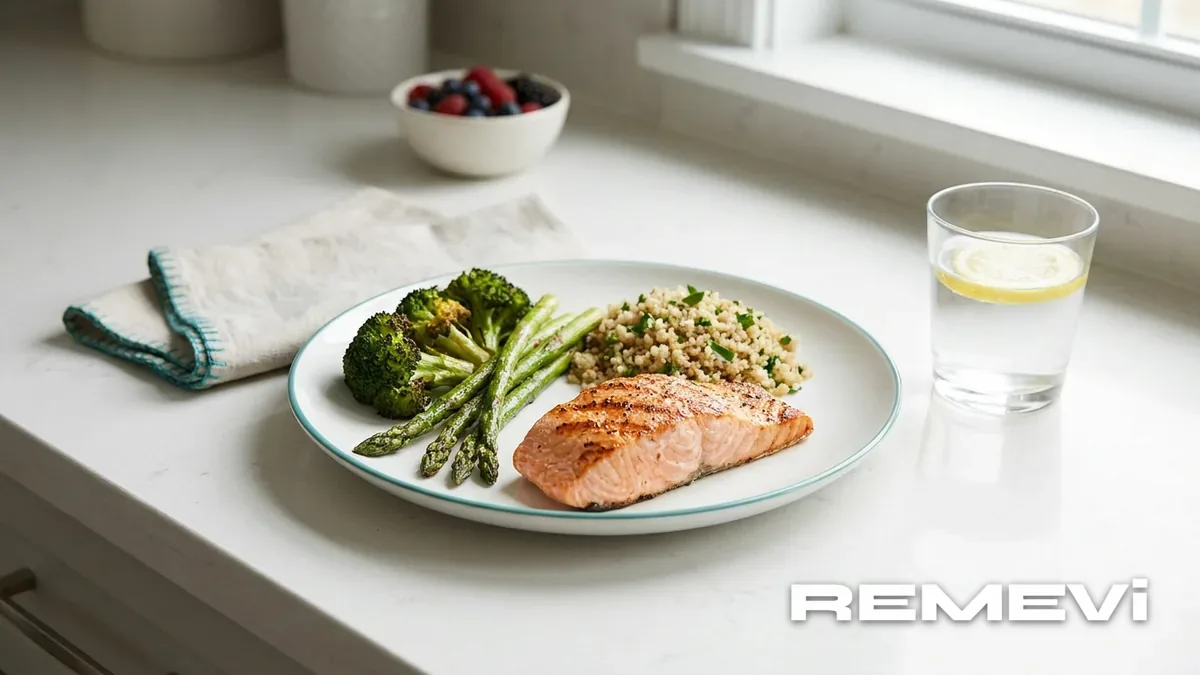
Think in components rather than a list of “allowed” and “forbidden” foods. Start with an amount that feels manageable and keep room to adjust.
| Meal component | Everyday options | A practical way to use it |
|---|---|---|
| Protein food | Eggs, fish, poultry, tofu, yogurt, beans or lentils | Include an option you enjoy; if you fill up quickly, try it early in the meal |
| Vegetables or fruit | Cooked vegetables, berries, banana, melon | Choose the texture and portion you tolerate |
| Grains or other starches | Oats, rice, potato, whole-grain bread or tortilla | Pair with other components instead of automatically removing carbohydrates |
| Fats and flavor | Olive oil, avocado, nuts, herbs | Adjust richness if it makes a meal uncomfortable |
You do not need separate “diet food” for every meal. A family meal of chicken, rice and vegetables can be portioned to fit you. A bowl of lentil soup can work when cooking a full dinner feels impractical. Beans and tortillas do not become off-limits simply because you take semaglutide.
Keep allergies, food access, cultural preferences and medical restrictions part of the plan. Frozen vegetables, canned beans and simple leftovers may be easier to maintain than an expensive shopping list.
Protein matters, but there is no universal prescription
Adequate protein supports muscle care during weight loss. It does not tell the body to burn only fat, and increasing protein alone cannot substitute for resistance exercise. The joint advisory also notes uncertainty about the best weight basis for calculating protein needs in people with obesity.
Rather than multiplying a goal weight by a generic number, ask for a target suited to your body size, age, activity, kidney health and overall intake. Then ask what that target looks like using foods you normally eat.
A useful appointment question is: “If I usually have eggs at breakfast and beans at dinner, what would you add or change?” This gives a dietitian more to work with than a list of supplements. See muscle preservation on GLP-1 treatment for the exercise and monitoring side.
A sample day, with options
These examples illustrate variety. They are not a complete nutrition prescription, and portions or extra meals may need adjustment.
- Breakfast: yogurt with oats and fruit, or eggs with a tortilla and vegetables.
- Lunch: chicken, tofu or beans with rice and cooked vegetables.
- A smaller eating opportunity if needed: yogurt, a piece of fruit with an appropriate protein food, or leftovers you can comfortably tolerate.
- Dinner: fish with potato and vegetables, or lentil soup with bread.
If you cannot finish a larger meal, ask whether dividing food into smaller eating opportunities fits your plan. Do not treat an almost-empty plate as proof of a successful treatment day.
Adjust for nausea and early fullness
Smaller, more frequent meals and avoiding large or very fatty meals can help some people manage digestive symptoms. Food tolerance varies; a food that is comfortable for someone else may not suit you. The joint advisory’s gastrointestinal guidance supports adapting food and timing while reviewing persistent symptoms.
Try one manageable change at a time, such as serving a smaller first portion or choosing a simpler preparation. Record what happened so the care team can help. Do not assume every symptom can be solved by food choices or that discomfort means you should keep increasing the dose.
For further context, see semaglutide and nausea and GLP-1 side-effect management.
Fluids and fiber need to fit your situation
Make fluids accessible through the day. If you have a medical fluid restriction, ask how to follow it during treatment instead of adopting a generic water target. Vomiting and diarrhea can cause dehydration; being unable to keep fluids down needs prompt medical attention. Wegovy prescribing information.
For constipation, food sources of fiber include fruit, vegetables, oats and legumes. Increase fiber gradually as tolerated rather than suddenly adding large quantities. If symptoms continue, ask about a treatment plan instead of combining supplements or laxatives on your own. The joint advisory addresses both gradual fiber intake and the need for additional care when food measures are insufficient. Our constipation guide offers more questions to bring to a visit.
Alcohol may worsen nausea or reflux during GLP-1 treatment. Discuss whether it fits your health and medicines; there is no reason to assume that every person becomes more sensitive to alcohol. Joint nutrition advisory.
Shakes and supplements: solve a specific problem
A protein drink may be useful when ordinary food is difficult, but buying one is not a requirement. Bring the label to your clinician or dietitian and ask whether it helps meet your actual needs. Supplements should fill an identified gap, not replace evaluation of persistent poor intake.
Ask about cost and alternatives too. Sometimes a familiar food is easier to tolerate and afford. If several food groups have disappeared from your routine, that is worth reviewing even if the scale is moving in the direction you hoped.
Emotional eating still deserves its own care
An appetite change is not evidence that semaglutide treats an eating disorder or removes emotional triggers. The joint advisory recommends screening for disordered eating and notes that the effects of GLP-1 medicines on eating disorders are not well established.
Tell your clinician about loss-of-control eating, fear around meals, severe restriction or distress. That information helps determine what support is appropriate. It is not a failure of willpower, and it should not be answered simply by pursuing a stronger medication effect.
When the food plan needs clinical review
Contact your care team if you repeatedly cannot eat enough, have persistent symptoms, or notice worsening weakness or dizziness. Severe or persistent abdominal pain, repeated vomiting, or inability to retain fluids requires prompt medical attention. Wegovy Medication Guide.
Bring a short record of meals, fluids, symptoms and dose dates. Ask what needs to change, whether you need a registered dietitian, and when you should check in again.
Review how REMEVi care works and semaglutide information to prepare questions. For the longer view, our results timeline explains why sustainable follow-up matters beyond one meal or one weigh-in.
This guide is educational, not an individualized nutrition or dosing plan. FDA-approved products and compounded preparations are distinct; compounded drugs are not FDA-approved. FDA information.
Common questions
What should I eat while taking semaglutide?
Use a flexible pattern that includes protein foods, vegetables or fruit, grains or other starches, and appropriate fats. Adapt portions and texture to your tolerance and medical needs. There is no single required semaglutide diet.
How much protein do I need?
Ask a clinician or registered dietitian for an individual target. Body size, age, kidney health, activity and overall intake matter. Adequate protein supports nutrition but cannot guarantee that all weight lost is fat.
Do I have to stop eating rice, beans or tortillas?
No. Familiar foods can fit a balanced plan. Portion size, preparation, tolerance and the rest of the meal matter more than banning a particular cultural food.
Are shakes necessary?
No. A shake may help fill a specific intake gap when food is difficult, but it is not automatically needed and is not a complete replacement for varied meals. Discuss ingredients and your needs before relying on supplements.
Does semaglutide treat emotional eating?
Changes in appetite do not establish treatment of emotional eating or an eating disorder. Tell your clinician about loss-of-control eating, distress or severe restriction so appropriate support can be arranged.
What if I am too nauseated to eat?
Small meals and simpler foods may be easier to tolerate, but persistent poor intake needs review. Seek prompt medical help for repeated vomiting, inability to keep fluids down, or severe or persistent abdominal pain.
A clearer next step.
Bring your questions, health history and treatment goals. A licensed clinician can help assess what fits your needs.
See if you qualify →