Tirzepatide activates two receptors, GIP and GLP-1, that participate in appetite and blood-glucose regulation. It reduces calorie intake, stimulates insulin release in response to glucose and delays stomach emptying. Having two targets does not establish that it is the best or safest medicine for every person.
The mechanism explains how the molecule acts. The finished product’s label establishes its approved uses, dosing and warnings; those are separate questions.
What GIP and GLP-1 mean
GLP-1 stands for glucagon-like peptide-1. GIP stands for glucose-dependent insulinotropic polypeptide. Both belong to the incretin hormone system involved in the response to food.
An agonist activates a receptor. Tirzepatide is a single molecule that activates both GIP and GLP-1 receptors. Its structure enables binding to albumin, a blood protein, which helps prolong its action. The approved injection products are administered weekly. Zepbound prescribing information, sections 2 and 12
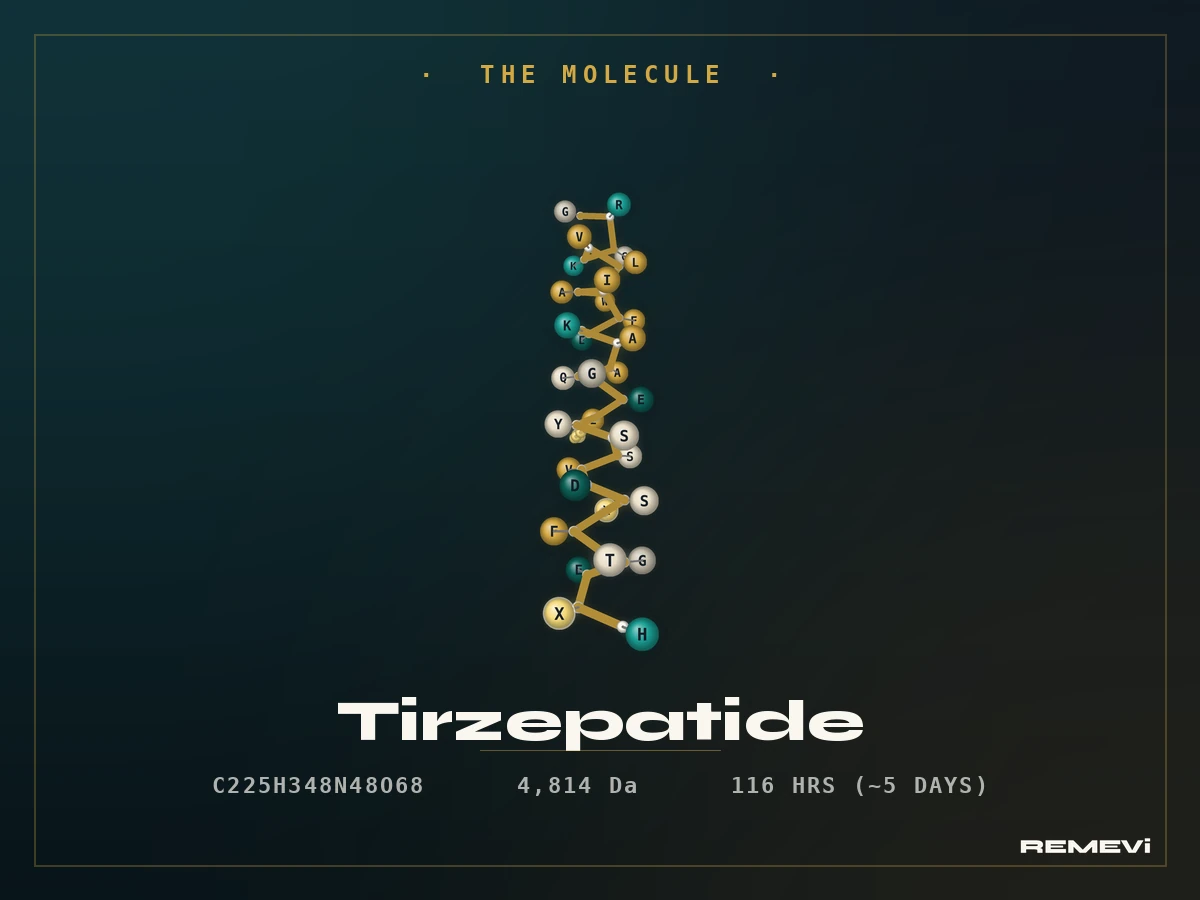 Tirzepatide activates GIP and GLP-1 receptors. This illustration describes the molecule, not the performance of a particular preparation.
Appetite, blood glucose and stomach emptying
| Effect | What the label describes | Why it matters |
|---|
| Appetite and calorie intake | Reduced calorie intake, likely through appetite effects | Response must be assessed over time; less appetite alone does not establish the correct dose |
| Insulin and glucagon | Glucose-dependent insulin release and lower glucagon secretion | Blood glucose can fall; insulin or sulfonylureas can increase hypoglycemia risk |
| Stomach emptying | Slower emptying, most pronounced after the first dose and diminishing over time | Oral medicine absorption and planned anesthesia or sedation need discussion |
The label describes nonclinical evidence that GIP may contribute to food-intake regulation. It does not establish that GIP independently amplifies every GLP-1 effect. Nor does slower stomach emptying remain equally strong throughout treatment. Zepbound prescribing information, sections 5, 7 and 12
Mounjaro versus Zepbound: same ingredient, different indications
| Product | U.S. approved uses | Formulation |
|---|
| Mounjaro | Type 2 diabetes glucose control in adults and children 10+; major cardiovascular-risk reduction in adults with type 2 diabetes at high risk | Weekly injection |
| Zepbound | Adult weight management with obesity or overweight plus a weight-related condition; moderate-to-severe obstructive sleep apnea in adults with obesity | Weekly injection |
| Compounded tirzepatide | No FDA-approved indication | The prescribed preparation has its own instructions |
Sources: Mounjaro, section 1, Zepbound, section 1. Pediatric Mounjaro approval does not establish pediatric eligibility for Zepbound or availability through REMEVi.
Zepbound’s labeled maintenance doses also depend on the reason for treatment: 5, 10 or 15 mg weekly for weight reduction, versus 10 or 15 mg for obstructive sleep apnea. The 2.5 mg starting dose is not a Zepbound maintenance dose. A clinician sets escalation and assesses tolerability; these branded instructions do not define compounded dosing.
How tirzepatide differs from semaglutide
Semaglutide activates GLP-1 receptors; tirzepatide activates GIP and GLP-1. Comparing outcomes requires a trial with named doses and a defined population.
In SURPASS-2, 1,879 adults with type 2 diabetes were assigned to tirzepatide 5, 10 or 15 mg weekly, or semaglutide 1 mg weekly, for 40 weeks. Tirzepatide produced greater average A1C and weight reductions at the tested doses. This was not a comparison against every semaglutide dose or formulation. SURPASS-2 publication
For obesity treatment, the Zepbound label separately reports 72-week trials in adults with and without type 2 diabetes. Those findings concern trial products, populations and follow-up periods. They do not predict an individual’s outcome or establish equivalent results for compounded tirzepatide. Zepbound clinical studies, section 14.1
Read the semaglutide–tirzepatide comparison for the broader treatment decision. Appetite changes in the first days or weeks do not justify advancing the dose yourself.
Safety questions to raise before treatment
Tell the prescriber about personal or family medullary thyroid carcinoma, MEN2, serious drug allergies, pancreatitis, gallbladder disease, severe digestive symptoms and other diabetes medicines. The labels distinguish contraindications from warnings; a history needing assessment is not automatically a formal contraindication.
Discuss pregnancy plans and oral contraception. Mounjaro and Zepbound advise a non-oral contraceptive or an added barrier method for four weeks after starting and four weeks after each dose increase. Tell any anesthesia or procedure team that you use tirzepatide. Seek prompt evaluation for severe persistent abdominal pain, significant vomiting or dehydration; severe allergic symptoms require emergency help. Mounjaro safety information, Zepbound safety information
Do not combine tirzepatide products or add another GLP-1 treatment yourself. If treatment is interrupted, see the missed-dose guide and contact the prescriber about restarting.
From mechanism to a care plan
A licensed clinician considers eligibility, symptoms, other medicines and treatment response. REMEVi includes clinician-required GLP-1 labs, with tests and timing decided individually. Care is available in English and Spanish in 49 states and Washington, DC, excluding Louisiana. See tirzepatide care options.
Compounded tirzepatide is not FDA-approved, is not a generic version of Mounjaro or Zepbound and does not share their approved-product evidence. This article is educational; individual results vary.