Yes, this interaction is real and worth planning for: tirzepatide, the active ingredient in Mounjaro and Zepbound, can make birth control pills less effective. The FDA prescribing information advises switching to a non-oral contraceptive method, or adding a barrier method, for 4 weeks after you start tirzepatide and for 4 weeks after each dose increase. Mounjaro: prescribing information Zepbound: prescribing information
That is the short answer, and it is one of the most practical things to know before a first dose. What follows is the longer answer: why the interaction happens, what the label says word for word, why the same warning does not appear on semaglutide’s label, and how to plan around it with your clinician. This is general education, not medical advice.
The instructions differ: semaglutide has a recommendation to stop at least two months before a planned pregnancy; tirzepatide has a specific four-week oral-contraception precaution after starting and after each increase. Zepbound: prescribing information
Why tirzepatide affects the pill (but not all birth control)
Tirzepatide works on two gut-hormone receptors at once, GIP and GLP-1. That dual action is what regulates appetite and blood sugar, and it also slows how quickly your stomach empties into the intestine. According to the FDA label, the delay in gastric emptying is largest after the first dose and diminishes over time. You can read more about the mechanism in our guide to how tirzepatide works. Zepbound: prescribing information
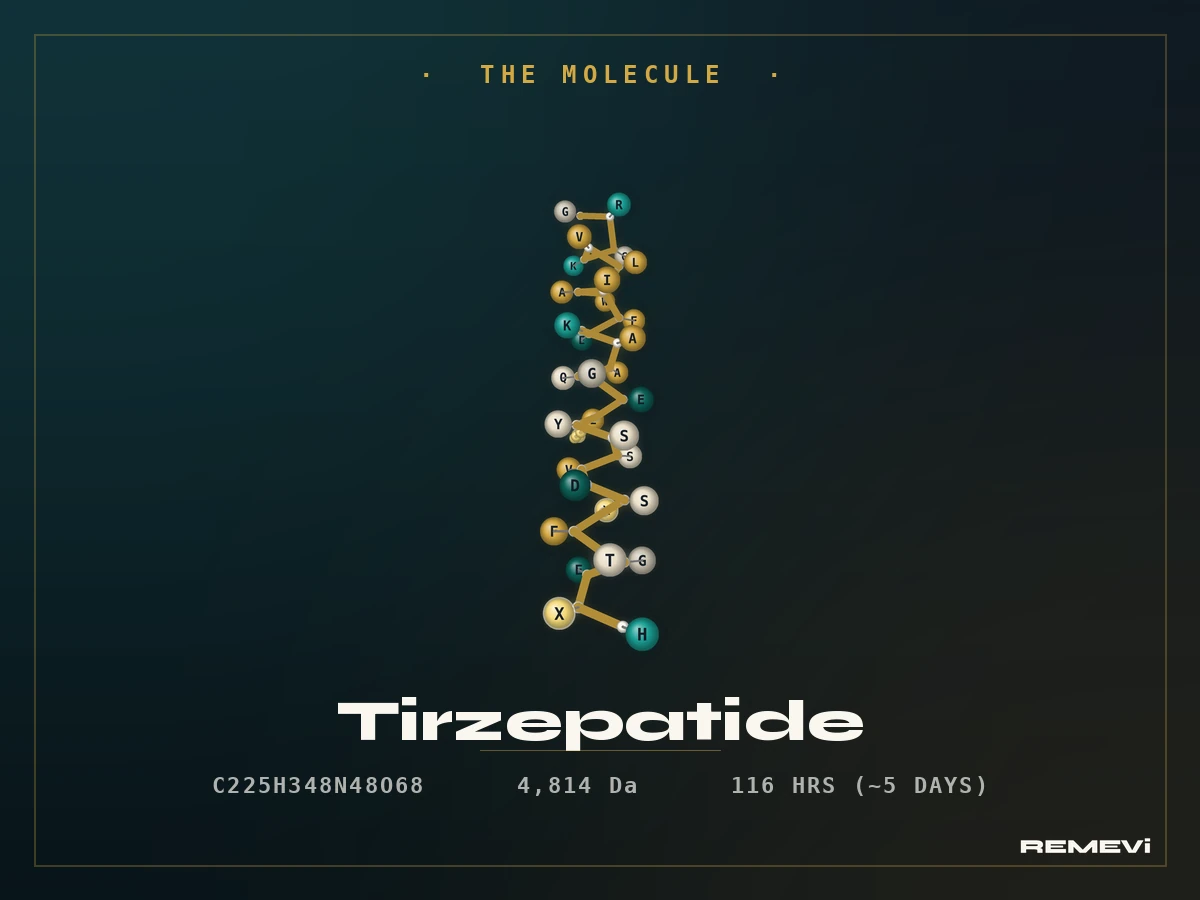 This is tirzepatide, a dual GIP and GLP-1 receptor agonist. The same action that slows stomach emptying and extends fullness can also slow how an oral contraceptive is absorbed, especially in the first weeks after starting or raising the dose.
A birth control pill only works if your body absorbs enough of it, and absorption happens as the pill moves through the stomach and intestine. Slow that trip down and the peak levels of the hormones can drop. The label quantifies this: when a combined oral contraceptive was taken alongside a single 5 mg dose of tirzepatide, peak concentrations of ethinyl estradiol, norgestimate, and norelgestromin fell by 59%, 66%, and 55%, while total exposure fell by roughly 20% to 23%, and peak levels arrived 2.5 to 4.5 hours later. Those are pharmacology figures from the prescribing information, not outcomes, but they explain why the label treats the first weeks with caution.
The flip side is just as useful to know. Methods that never pass through your gut are not part of this concern. The label is explicit that hormonal contraceptives that are not administered orally should not be affected. That includes IUDs, implants, the shot, the patch, and the ring. This is why the guidance is framed as “switch to non-oral or add a barrier,” rather than “stop preventing pregnancy.”
What the FDA label actually says
The wording in the prescribing information for tirzepatide (Mounjaro/Zepbound) is specific, and it is worth reading as written: “Advise patients using oral hormonal contraceptives to switch to a non-oral contraceptive method or add a barrier method of contraception for 4 weeks after initiation and for 4 weeks after each dose escalation.”
Two details in that sentence do the heavy lifting. First, the guidance is not only about your first month. Tirzepatide treatment typically starts at 2.5 mg once weekly and moves up in steps, each at least 4 weeks apart. Every one of those increases restarts the 4-week backup window, so the guidance can apply several times across your first months of treatment. Second, the label offers two ways to comply, not one: move to a method that does not depend on gut absorption, or keep your pill and add a barrier method for those windows.
The reason the label takes this seriously is also stated plainly: based on animal studies, tirzepatide may cause fetal harm, and the prescribing information says to discontinue it when a pregnancy is recognized. Contraception that keeps working while you are on the medication is not a side detail. It is part of using the medication as intended.
Does semaglutide (Ozempic/Wegovy) have the same warning?
No, and the distinction is worth getting right, because the two medications are often discussed as if they were interchangeable. The FDA label for semaglutide does not carry this contraceptive advisory. In the clinical pharmacology section of that label, an oral contraceptive was among the medications studied, and no clinically relevant effect on absorption was observed at steady state. Semaglutide also delays gastric emptying, but per its label the measured effect on co-administered oral medications did not reach clinical relevance. Zepbound: prescribing information
So if you compare the two molecules, this is one genuine, documented difference: tirzepatide’s label tells pill users to add or switch protection during specific windows, and semaglutide’s label does not. It is exactly the kind of detail that matters more than marketing claims when weighing semaglutide vs tirzepatide, and it is a fair question to raise with a clinician if birth control pills are part of your routine.
To be clear about what this difference is not: it does not make one medication better or safer than the other overall. It is one labeled consideration among many, and how it weighs into your decision depends on your health picture, your contraception preferences, and your clinician’s judgment.
What to do: plan it with your clinician
This interaction is manageable, and the planning conversation is short when it happens at the right time. Before starting tirzepatide, tell your clinician what birth control you use. If it is a pill, ask how the 4-week guidance applies to you, which they may address by suggesting a non-oral method, a barrier backup for the windows around each dose change, or both. If you are already on tirzepatide and just learned about this, do not stop either medication on your own; ask the question now and adjust from there.
A good care team brings this up without being asked. That is the point of physician-led care: a licensed clinician who reviews your medications, flags interactions like this one before they matter, and stays available as your dose changes, with care coaching between visits so the practical questions never pile up.
At REMEVi, a real clinician guides you from your first consult through every dose adjustment, with transparent pricing and follow-up that does not disappear after the prescription. GLP-1 medications are FDA-approved for specific indications, and eligibility is determined by a licensed clinician. Compounded tirzepatide is a non-FDA-approved preparation. It is not a generic and is not the same as Mounjaro® or Zepbound®.
Real doctors. Real care. remevihealth.com
Your Health. Your Terms.